Intermodal corridors: stability amid volatility
Geopolitics increasingly tests European supply chains from outside logistics. Why structured intermodal corridors help manage volatility through system design.
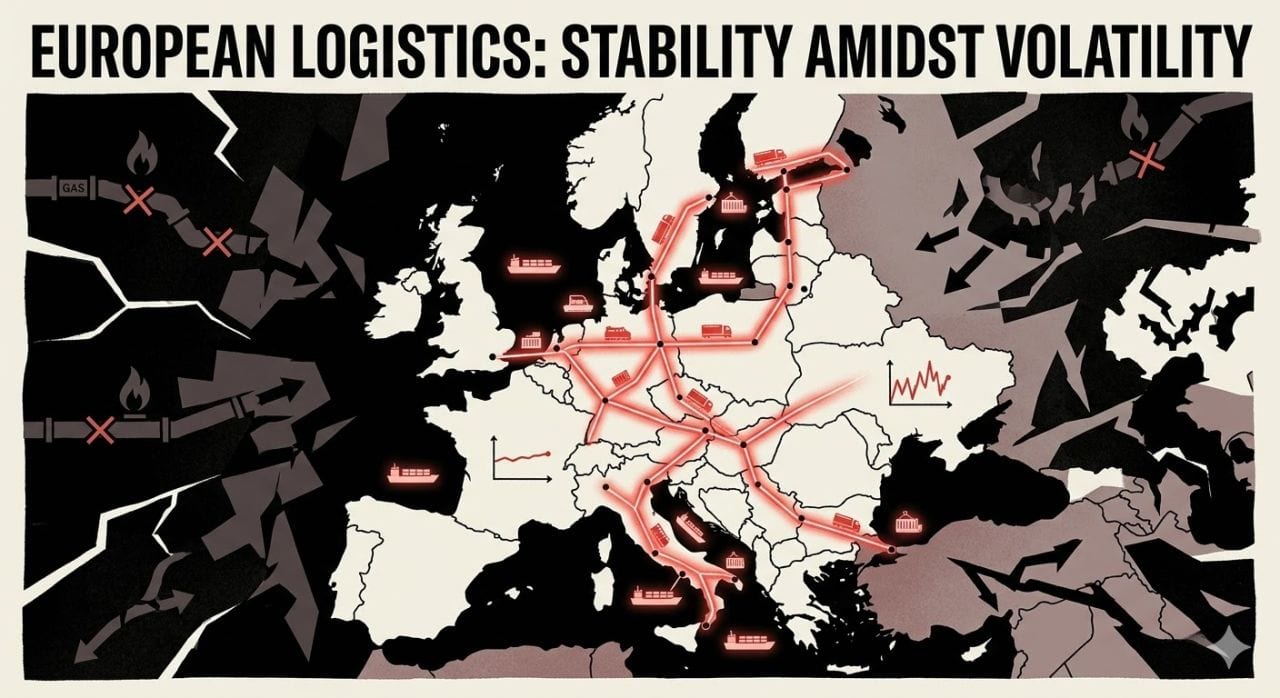
Logistics systems are increasingly tested by forces outside of logistics itself. Recent developments in the Middle East are another reminder that supply chains do not operate in isolation.
Energy flows, trade routes and infrastructure dependencies are closely connected to geopolitical stability. When conditions shift, the effects are felt across European logistics — often indirectly, but quickly.
Performance under change, not under normal conditions
In this environment, the key question is not how a logistics system performs when everything runs normally, but how it behaves when external factors change. This is where structure matters.
What well-defined intermodal corridors provide
- Stable long-haul connections that do not depend on fluctuations in road capacity.
- Reduced exposure to short-term market reactions, because the long-distance leg runs on planned rail and ferry capacity rather than on the spot market.
- Better planning reliability for industrial supply chains that need predictable transit times.
Managing volatility by design
Volatility cannot be removed. But its impact can be managed through system design — choosing corridors, capacity and partners before the disruption, not after it. This is increasingly becoming a core requirement for European logistics.
EFFIMODAL operates structured intermodal corridors designed for predictable European logistics, connecting Italy, Germany, Scandinavia and the Baltics by rail, ferry and road. If your supply chain needs more planning certainty, let’s talk about your flows.
Originally shared on LinkedIn — follow Effimodal for more updates.
Shift your freight to intermodal
Tell us your route and volumes — we'll come back with a combined transport offer, including a CO₂ estimate for your lane (EcoTransIT World, ISO 14083 methodology).
Get a Quote →